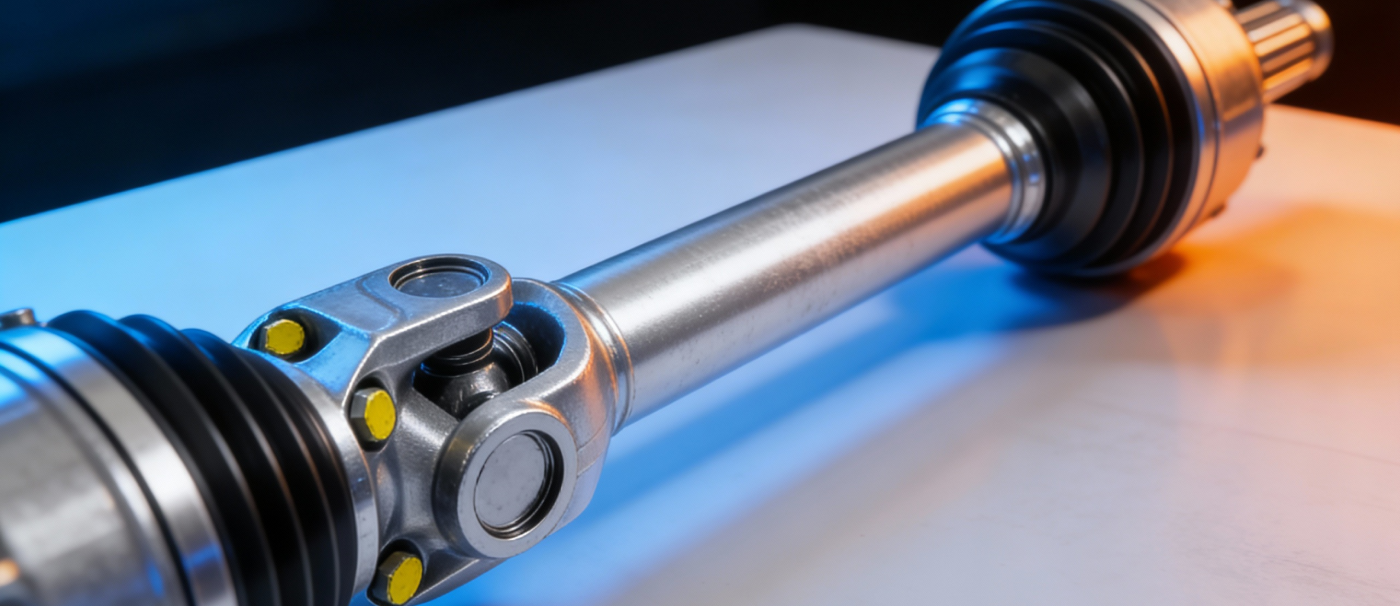




As the name suggests, a drive shaft is a power-transmitting shaft. It serves as the medium to transfer power output by the engine to the vehicle's drive wheels after the transmission reduces speed and increases torque. Since the vehicle's engine and drive wheels are not on the same axis, and the chassis is connected to the wheels via springs (rather than being fixed), the distance between the engine shaft and drive wheels is constantly changing. To adapt to this, automotive designers have meticulously designed the connection between the engine and drive wheels, with the drive shaft being a key component. Both ends of the drive shaft are connected by universal joints to ensure stable power transmission under all conditions.
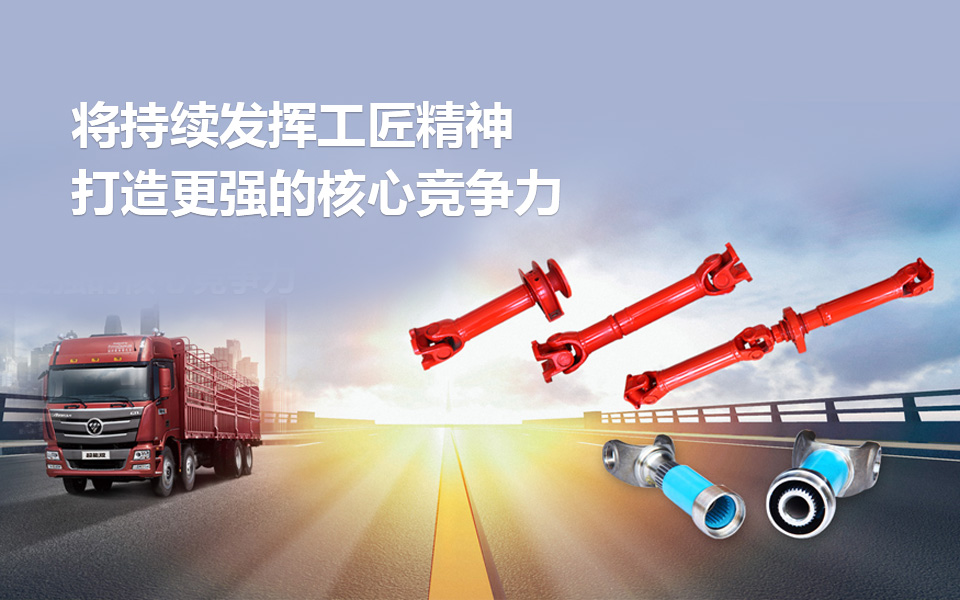
Most universal drive shafts are open, tubular structures with rigid cross universal joints at both ends. The drive shaft tube is designed to meet the needs of long-distance torque transmission while minimizing power consumption. It is typically made of thin-walled straight-seam steel pipe. To ensure stable and reliable power transmission, the steel pipe must meet the following requirements for strength, precision, and process performance:
High Strength Requirement: Due to the complex actual operating conditions of automotive drive shafts – which must withstand randomly varying alternating loads, as well as alternating loads caused by startup, braking, and road condition changes – the steel pipe must possess excellent strength and ductility.
High Precision Requirement: As a moving component that transmits torque at high speeds, the drive shaft’s steel pipe must meet specific dimensional and geometric precision standards. This ensures the drive shaft’s center of mass is close to the rotation center, reducing system vibration caused by centrifugal force and guaranteeing stability during high-speed vehicle operation.
Process Performance Requirement: To ensure drive shaft assembly quality, the steel pipe must pass process performance tests such as necking, flattening, and static torsion.
The vehicle’s drive shaft is a critical component that transmits power from the transmission to the rear axle. If it breaks or falls off during use, it can easily cause the vehicle to roll over, leading to serious safety consequences. Common causes of drive shaft loosening or detachment include:
Damage to the drive shaft due to metal fatigue after long-term use (with obvious fatigue damage marks on the fracture surface of the drive shaft yoke); insufficient torque when tightening drive shaft bolts.
Unevenness or warpage of the universal joint flange surface, which converts surface contact into point contact and significantly reduces static friction between flanges.
Deformation of the universal joint flange’s bolt holes, resulting in irregular fitting between bolts and holes.
Loosening and wear of universal joint bearings, or severe wear of the cross joint, increasing drive shaft vibration during rotation.
Bending of the drive shaft, detachment of the balance weight, or dynamic balance imbalance.
Installation deviation caused by deformation of the intermediate bearing bracket and frame beam, loosening of the intermediate bearing inner ring, or damage to the intermediate shaft bearing.
 Tel: +86-18838478091
 Email: Joe@hntxcd.com
 Add: South of Changqing Street, Economic and Technological Development Zone, Xuchang City, Henan Province