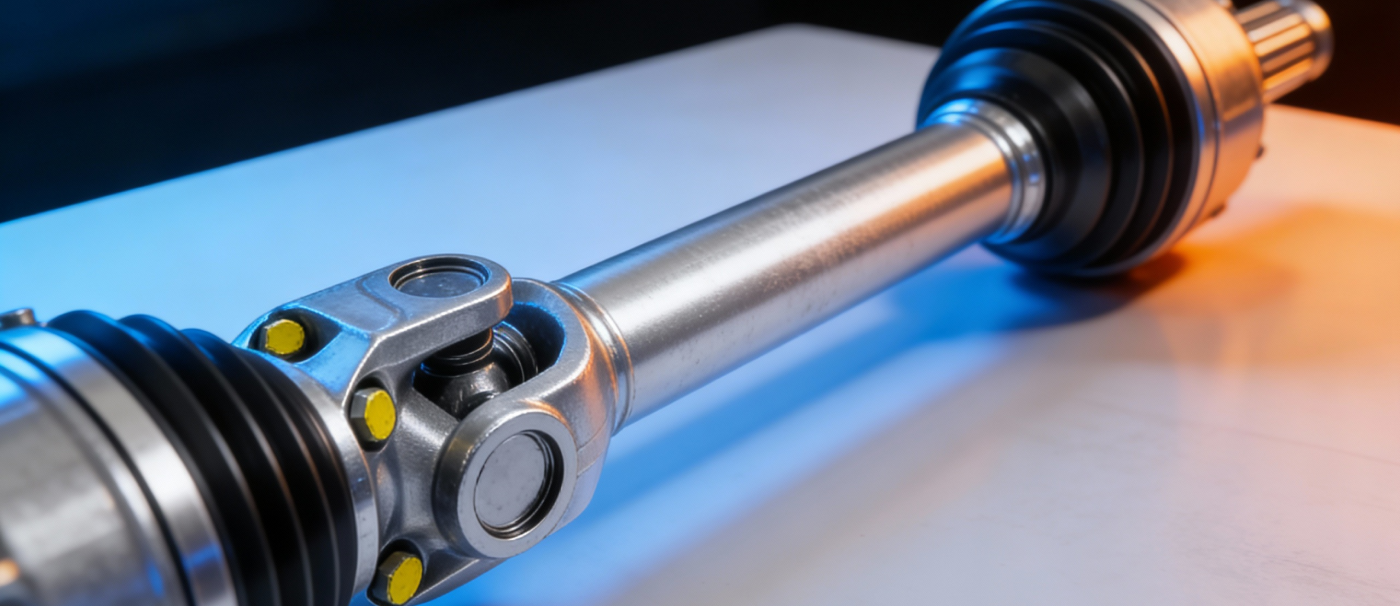




The transmission shaft is a high-speed, low support rotating body, so its dynamic balance is crucial. Generally, the transmission shaft needs to undergo a dynamic balancing test before leaving the factory and be adjusted on the balancing machine. For vehicles with front engine and rear wheel drive, the rotation of the transmission is transmitted to the shaft of the main reducer, which can be several joints connected by universal joints.
1. Definition of Transmission Shaft Terminology
The transmission shaft is a high-speed, low support rotating body, so its dynamic balance is crucial. Generally, the transmission shaft needs to undergo a dynamic balancing test before leaving the factory and be adjusted on the balancing machine. For vehicles with front engine and rear wheel drive, the rotation of the transmission is transmitted to the shaft of the main reducer, which can be several joints connected by universal joints.
Composition of 2 transmission shafts
The transmission shaft is composed of a shaft tube, a telescopic sleeve, and a universal joint. The telescopic sleeve can automatically adjust the distance between the transmission and the drive axle. The universal joint ensures the variation of the angle between the output shaft of the transmission and the input shaft of the drive axle, and achieves equal angular velocity transmission between the two shafts.
Expansion sleeve in the transmission shaft
The traditional structure of the transmission shaft expansion sleeve is to weld the spline sleeve and the flange fork together, and weld the spline shaft to the transmission shaft tube. The new type of transmission shaft changes the traditional structure by welding the spline sleeve and transmission shaft tube together, and integrating the spline shaft with the flange fork. And change the rectangular spline to a high pressure angle involute short
Tooth splines not only increase strength but also facilitate extrusion forming, meeting the needs of high torque working conditions. On the surface of the teeth of the expansion sleeve and spline shaft, a layer of nylon material is applied as a whole, which not only increases wear resistance and self-lubricating properties, but also reduces the damage of impact load to the transmission shaft and improves the buffering capacity.
This type of transmission shaft adds a tubular sealing protective sleeve outside the flange spline shaft, and two polyurethane rubber oil seals are set at the end of the protective sleeve, creating a completely sealed space inside the expansion sleeve, preventing the expansion spline shaft from being eroded by external dust, not only dustproof but also rust proof. Therefore, applying lubricating grease to the spline shaft and sleeve at once during assembly can fully meet the usage requirements, without the need for oil nozzle lubrication, reducing maintenance content.
4. Shaft sleeve in the transmission shaft
● Function:
Generally, universal joints are composed of cross shafts, cross bearings, and flange forks. The universal joint is a key component on the transmission shaft of a car. On vehicles with front engine and rear wheel drive, the universal joint drive shaft is installed between the transmission output shaft and the drive axle main reducer input shaft; Vehicles with front engine and front wheel drive omit the transmission shaft, and universal joints are installed between the front axle half shaft, which is responsible for both driving and steering, and the wheels. Uneven road surfaces, load changes, or differences in the installation positions of two assemblies during vehicle operation can cause variations in the angle and distance between the transmission output shaft and the drive axle main reducer input shaft. Therefore, a "variable strain" device is needed to solve this problem, hence the universal joint.
● Transmission characteristics:
In front engine rear wheel drive (or all wheel drive) vehicles, due to suspension deformation during movement, there is often relative motion between the input shaft of the drive shaft, main reducer, and the output shaft of the transmission (or transfer case). In addition, to effectively avoid certain mechanisms or devices (which cannot achieve linear transmission), there must be a device to achieve normal power transmission, hence the emergence of universal joint transmission. Universal joint transmission must have the following characteristics:
a 、 Ensure reliable transmission of power when the relative position of the two connected shafts changes within the expected range;
b 、 Ensure that the two connected shafts can operate uniformly. The additional load, vibration, and noise generated by the angle of the universal joint should be within the allowable range;
c 、 High transmission efficiency, long service life, simple structure, easy manufacturing, and easy maintenance are required. For automobiles, since the output shaft of a cross shaft universal joint rotates at different speeds relative to the input shaft (with a certain included angle), it is necessary to adopt double universal joints (or multiple universal joints) for transmission, and arrange two universal joint forks connected to the transmission shaft on the same plane, so that the included angles of the two universal joints are equal. This is very important. During design, the angle of the universal joint should be minimized as much as possible.
6. Purpose of Transmission Shaft
Special purpose vehicle transmission shafts are mainly used in oil tanker trucks, refueling trucks, sprinkler trucks, sewage suction trucks, fecal suction trucks, fire trucks, high-pressure cleaning trucks, road clearing trucks, aerial work vehicles, garbage trucks and other vehicle models.
7. Use and maintenance of transmission shaft
In order to ensure the normal operation of the transmission shaft and extend its service life, attention should be paid to:
It is strictly prohibited to start a car in high gear.
It is strictly prohibited to forcefully lift the clutch pedal.
Overloading and speeding of vehicles are strictly prohibited.
Regularly check the working condition of the transmission shaft.
Regularly check the fastening of the transmission shaft hanger, whether the supporting rubber is damaged, whether the connection parts of the transmission shaft are loose, and whether the transmission shaft is deformed.
To ensure the dynamic balance of the transmission shaft, it is necessary to regularly pay attention to whether the balance welding plate is detached. The new transmission shaft component is provided as a complete set. When installing the new transmission shaft, attention should be paid to the assembly markings of the expansion sleeve to ensure that the flange fork is in the same plane. When repairing and disassembling the transmission shaft, assembly marks should be printed on the expansion sleeve and flange shaft to maintain the original assembly relationship during reassembly.
Lubricating grease should be regularly added to the universal joint cross bearings. In summer, No. 3 lithium based grease should be injected, and in winter, No. 2 lithium based grease should be injected.
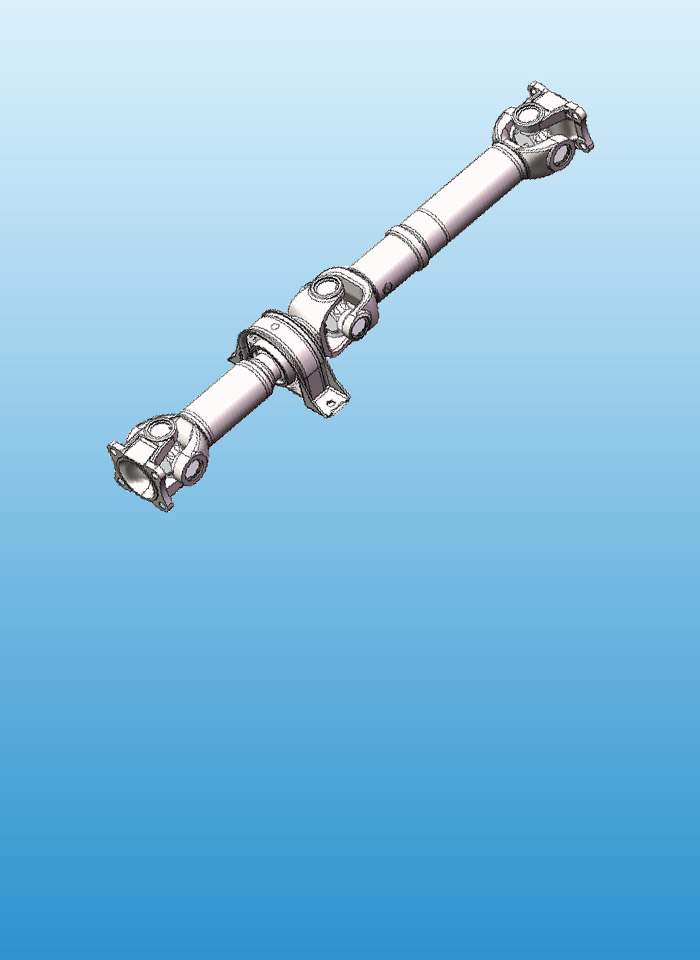
河南同心传动股份有限公司,创建于2001年,地处河南省许昌市经济技术开发区,占地8万平方米,国家高新技术企业,已进入新三板“精选层”阶段(股票代码:833454)。公司以“振兴中原经济,服务全球汽车产业”为己任,专业致力于各类汽车传动轴的研发、生产与销售,为行业客户提供一站式解决方案。
 Tel: +86-18838478091
 Email: Joe@hntxcd.com
 Add: South of Changqing Street, Economic and Technological Development Zone, Xuchang City, Henan Province